
From the Plateau to the Sea: Rio Becomes Brazil’s Capital After the Elohim War
Original publication date: not confirmed in the archive.
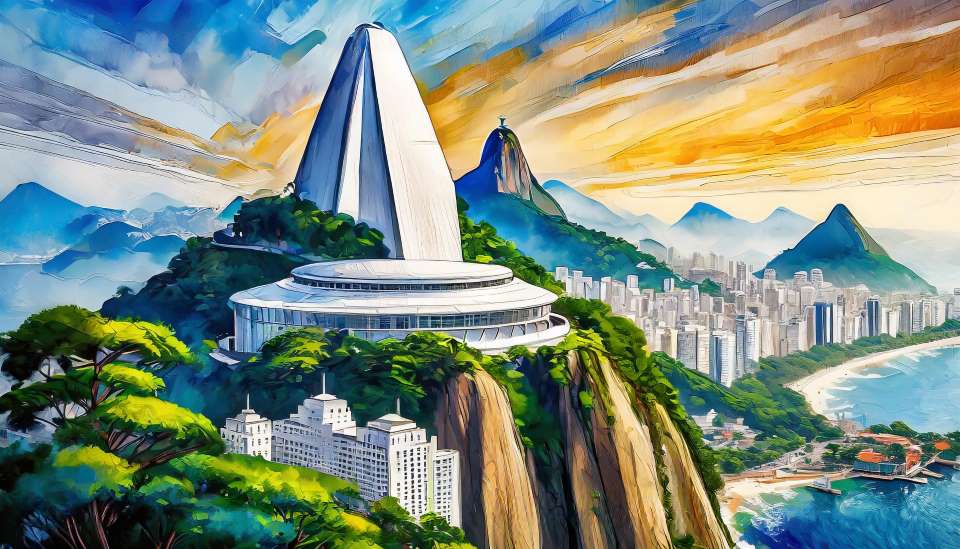
The Elohim War of 2032 left deep scars across the planet, reshaping geopolitical borders and the social and cultural structures of nations. In Brazil, one dramatic change followed: the federal capital moved from Brasília to Rio de Janeiro.
The decision, taken in 2034 after a national referendum, reflected a convergence of political, economic and religious forces that had transformed the country after the extraterrestrial conflict.
Why the capital moved
Symbolism and reconstruction
Brasília, the futuristic capital raised in the country’s interior, represented an ambitious nationalist project increasingly distant from post-war realities. Rio carried Brazil’s history, culture and identity. Its resilience during the conflict had made it a symbol of resistance and reconstruction.
A dynamic economy
Rio’s strategic position and port infrastructure helped it emerge as a powerful economic centre. The new world order of Macroregions, together with Brazil’s rise as a regional power, attracted international investment.
Religious influence
The presence of Popess Pretoria I’s temple established Rio as Ámeris’s spiritual centre. Her charismatic leadership and message of hope drew millions of believers, turning the city into a place of pilgrimage and renewed faith.
Reactions and adaptation
Rio’s population celebrated its new prominence as an opportunity for economic growth and cultural influence. Rapid transformation also brought challenges: higher population density, pressure on infrastructure and the need to adapt to a different social dynamic.
In Brasília, the loss of federal-capital status provoked frustration and uncertainty. A city designed around government and its institutions now faced the task of reinventing its identity and finding a new role in Brazil.
A new chapter
The move marked a new chapter in the country’s history. Rio, with its natural beauty, cultural richness and resilient spirit, assumed leadership in an era shaped by post-war reconstruction, the search for identity and an uncertain future. Brasília’s legacy nevertheless remained: a symbol of the ambition and audacity that defined twentieth-century Brazil.